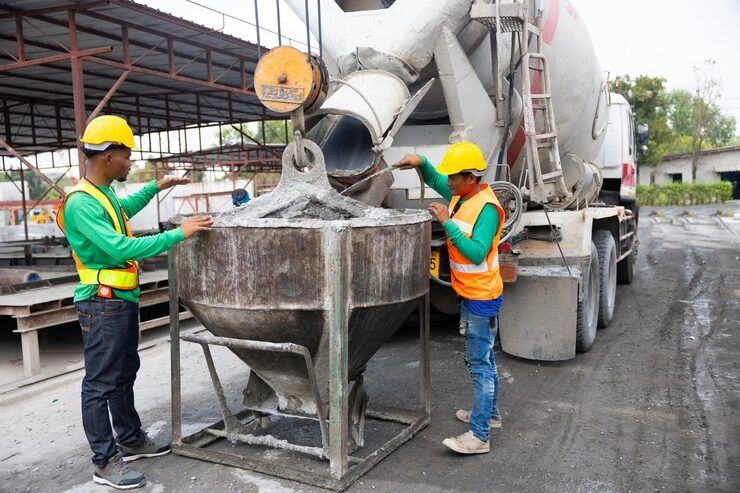
Concrete production and placement machines are essential systems used to prepare, transport, and place concrete in construction projects. These machines exist to ensure concrete is mixed accurately, delivered efficiently, and placed consistently according to structural requirements
Concrete batching plants automate the proportioning of cement, aggregates, water, and additives. Mixers ensure uniform consistency, while concrete pumps allow placement in areas that are difficult to access manually. Together, these machines form the backbone of modern infrastructure development, supporting buildings, bridges, roads, and industrial facilities.
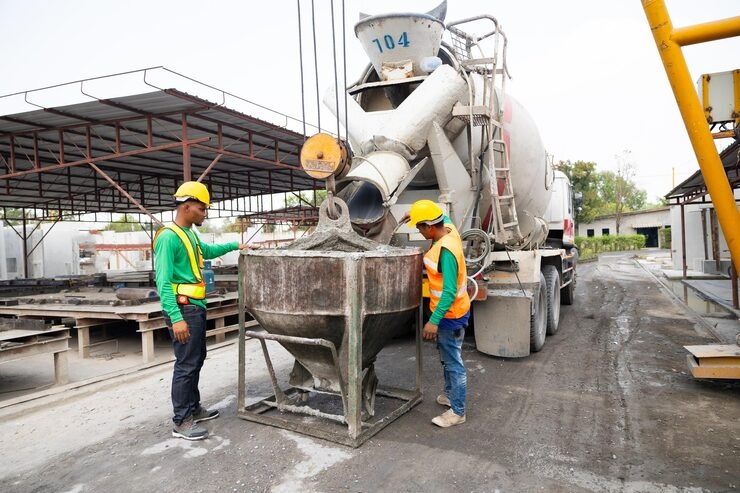
Why Concrete Production Machines Matter Today
Concrete is the most widely used construction material in the world. The efficiency and quality of concrete production directly affect structural strength, durability, and safety. Concrete production and placement machines help reduce material variation, improve productivity, and support large-scale construction timelines.
These machines affect a wide range of stakeholders, including civil engineers, project planners, infrastructure developers, and safety regulators. Without accurate batching and controlled placement, projects face issues such as weak structural performance, material waste, and construction delays.
Key problems solved by these machines include:
-
Inconsistent concrete strength
-
Manual handling limitations
-
Delayed construction timelines
-
Quality control challenges in large pours
By standardizing concrete preparation and delivery, these machines support predictable outcomes in both small and large construction environments.
Recent Updates and Industry Trends
Over the past year, concrete production technology has continued to evolve, driven by sustainability goals and digital integration. In 2024, several infrastructure projects adopted automated batching systems with real-time monitoring to reduce material loss and improve accuracy.
Digital control panels and sensor-based systems are increasingly common in modern batching plants. These technologies allow operators to track mix ratios, moisture content, and output volume more precisely. Concrete pumps have also seen improvements in energy efficiency and pipeline design to reduce pressure loss during placement.
Another notable trend is the growing use of ready-mix optimization software, introduced widely in late 2023 and early 2024, which supports better scheduling and mix consistency. Environmental considerations, such as reduced cement usage and controlled water consumption, have also influenced equipment design.
Laws, Standards, and Regulatory Influence
Concrete production and placement machines operate within established construction and safety frameworks. In many countries, equipment usage is influenced by building codes, environmental standards, and occupational safety regulations.
Common regulatory areas include:
-
Material quality standards for concrete mixes
-
Equipment safety guidelines for operators
-
Environmental controls on dust, noise, and water usage
-
Infrastructure quality norms set by public works authorities
Government-backed infrastructure programs often specify performance benchmarks for concrete production systems. Compliance with these guidelines ensures structural reliability and worker safety while supporting long-term infrastructure goals.
Key Tools and Resources for Understanding Concrete Machinery
Several tools and resources help professionals and learners understand concrete production and placement systems more effectively. These resources focus on education, calculation, and technical reference rather than commercial promotion.
Helpful resources include:
-
Concrete mix design calculators for strength estimation
-
Batch production monitoring dashboards
-
Equipment operation manuals from standards bodies
-
Construction planning templates for concrete scheduling
-
Industry knowledge portals covering concrete technology
These tools help users interpret machine performance, plan pours accurately, and maintain quality control across construction phases.
Overview of Concrete Production & Placement Machines
| Machine Type | Primary Function | Common Applications |
|---|---|---|
| Batching Plants | Precise material proportioning | Large-scale construction |
| Concrete Mixers | Uniform concrete blending | On-site and transit use |
| Concrete Pumps | Concrete placement at distance | High-rise and complex sites |
This table highlights how each machine plays a distinct role while contributing to a unified production process.
How Concrete Moves From Mixing to Placement
Concrete production follows a structured workflow:
-
Raw materials are measured in batching plants
-
Mixers ensure homogeneous blending
-
Pumps transfer concrete to required locations
This sequence minimizes manual handling and supports consistent quality throughout the construction process.
Frequently Asked Questions
What is the main purpose of a concrete batching plant?
A concrete batching plant ensures accurate proportioning of cement, aggregates, water, and additives to achieve consistent concrete quality.
How do concrete mixers improve construction efficiency?
Concrete mixers provide uniform blending, reducing variability and supporting predictable curing and strength performance.
Why are concrete pumps used instead of manual placement?
Concrete pumps allow controlled placement over long distances and heights, improving safety and productivity on complex sites.
Are concrete production machines suitable for small projects?
Yes, smaller-scale batching and mixing systems are commonly used for residential and medium-scale construction.
How do regulations affect concrete machinery usage?
Regulations guide material quality, equipment safety, and environmental controls, ensuring reliable and compliant construction practices.
Data Insight: Concrete Equipment Usage Growth
| Year | Infrastructure Projects Using Automated Batching |
|---|---|
| 2022 | Moderate adoption |
| 2023 | Increased integration |
| 2024 | Widespread implementation |
This trend shows growing reliance on automated concrete production systems in modern construction.
Conclusion
Concrete production and placement machines play a critical role in shaping modern infrastructure. By standardizing material preparation and enabling precise placement, these systems support safety, efficiency, and long-term structural performance. Advances in automation, digital monitoring, and regulatory alignment continue to improve how concrete is produced and applied.