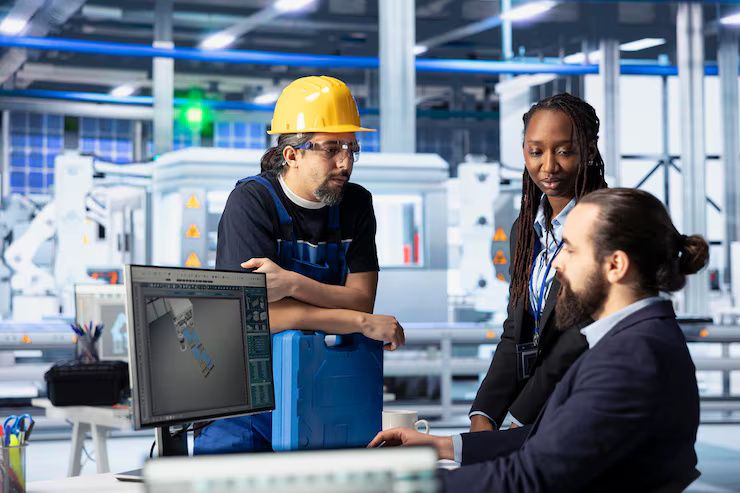
Tooling refers to the design and use of tools, molds, dies, jigs, and fixtures required to manufacture products with accuracy and efficiency. In manufacturing, tooling determines the quality, consistency, and speed of production
From the early days of manual machining to today’s computer-aided and automated manufacturing systems, tooling has evolved into a sophisticated science that directly impacts productivity. Modern tooling integrates advanced materials, CNC (Computer Numerical Control) systems, and digital design to create parts faster, with higher precision and less waste.
The goal of today’s tooling technology is to maximize efficiency while minimizing downtime, making it a cornerstone of industrial productivity in an increasingly competitive market.
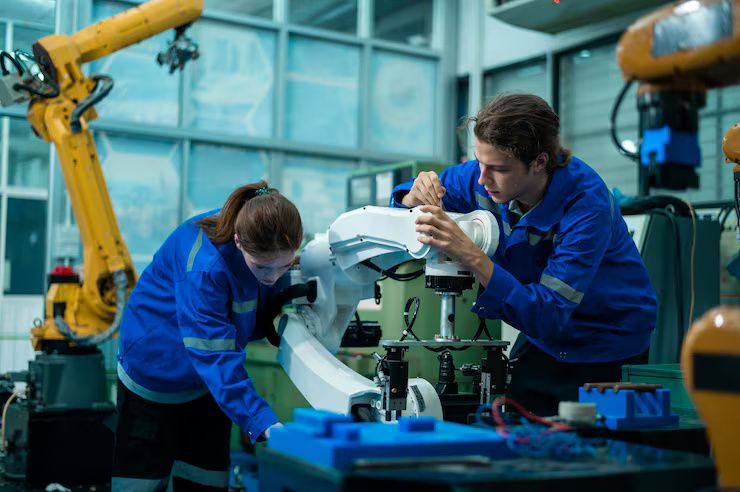
Why Modern Tooling Techniques Matter
In the modern manufacturing landscape, productivity depends heavily on the tools used. Tooling isn’t just about shaping materials—it defines the efficiency, sustainability, and profitability of the entire production process.
Key reasons modern tooling is vital today:
-
Precision Manufacturing: Ensures consistent quality and dimensional accuracy.
-
Reduced Cycle Times: Advanced tool materials and coatings allow faster operations.
-
Cost Efficiency: Durable tools reduce replacement frequency and maintenance needs.
-
Sustainability: Energy-efficient tooling minimizes material waste.
-
Flexibility: Digital and modular tooling adapts quickly to new product designs.
Industries such as automotive, aerospace, medical devices, electronics, and energy all rely on innovative tooling solutions to maintain competitiveness in a global market increasingly focused on efficiency and precision.
Recent Innovations and Trends (2024–2025)
The past few years have brought a wave of technological advancement to the tooling sector, merging traditional methods with smart manufacturing, AI, and advanced materials.
| Trend | Description | Impact on Productivity |
|---|---|---|
| Additive Manufacturing (3D Printing) | Produces complex tooling geometries with reduced lead times. | Enables rapid prototyping and custom tooling designs. |
| High-Performance Coatings | Diamond-like carbon (DLC) and titanium nitride (TiN) coatings enhance durability. | Extends tool life and reduces friction. |
| Smart Tool Monitoring Systems | Sensors and IoT-enabled tools monitor wear and temperature. | Reduces downtime through predictive maintenance. |
| Hybrid Tooling Systems | Combine subtractive and additive techniques in one process. | Increases versatility and precision. |
| Cryogenic Machining | Uses liquid nitrogen for cooling during cutting. | Improves tool lifespan and sustainability. |
Manufacturers adopting these innovations report up to 20–30% improvement in operational efficiency and reduced scrap rates across production lines.
Government Policies and Industrial Standards
Manufacturing productivity is closely tied to national and international frameworks that promote innovation, energy efficiency, and worker safety.
Key Indian Policies and Programs:
-
Make in India Initiative: Encourages the use of advanced technologies in domestic production.
-
National Capital Goods Policy (2016): Promotes modernization of machine tools and tooling systems.
-
Skill India Mission: Focuses on developing technical expertise in CNC programming and precision tooling.
-
Digital India and Industry 4.0 Mission: Supports adoption of IoT, AI, and robotics in industrial operations.
Global Standards and Regulations:
-
ISO 9001: Quality management systems for manufacturing.
-
ISO 14001: Environmental management standards for sustainable production.
-
ISO 13399: Tool data representation and exchange between CAD/CAM systems.
-
ANSI/ASME Standards: Define safety and performance parameters for tools and equipment.
Compliance with these standards ensures tool reliability, worker safety, and international product quality certification.
Core Modern Tooling Techniques
Modern tooling techniques combine mechanical precision with digital intelligence to optimize manufacturing efficiency.
| Technique | Description | Applications |
|---|---|---|
| CNC Machining | Automated cutting and shaping controlled by computer software. | Automotive parts, aerospace components, medical devices. |
| Additive Tooling | Layer-by-layer creation of molds, dies, and fixtures using 3D printing. | Rapid prototyping, low-volume production. |
| Composite Tooling | Tools made from carbon fiber or lightweight materials. | Aviation, motorsports, and wind energy sectors. |
| Modular Tooling Systems | Easily interchangeable tool components. | Flexible manufacturing setups and reduced setup time. |
| Micro Tooling | Ultra-precise tooling for small or complex parts. | Electronics, optics, and medical implants. |
| Automation-Assisted Tooling | Integration with robots and smart sensors. | Continuous, unattended production lines. |
These techniques allow manufacturers to maintain high output with minimal waste and superior quality standards.
How Tooling Enhances Productivity
Tooling improvements have a direct, measurable effect on productivity.
Here’s how modern techniques reshape operations:
-
Shorter Setup Times: Modular and quick-change tools cut downtime during part transitions.
-
Reduced Tool Wear: Advanced coatings and materials lower maintenance frequency.
-
Improved Accuracy: Precision-cutting tools ensure consistent product dimensions.
-
Process Optimization: Smart sensors detect inefficiencies in real time.
-
Automation Integration: Robot-assisted tooling supports 24/7 operations.
According to global manufacturing benchmarks, optimized tooling can increase plant efficiency by 15–40% depending on production type.
Tools, Software, and Resources for Modern Tooling
Implementing advanced tooling systems requires not only hardware but also digital support tools for design, analysis, and monitoring.
Design & Simulation Tools
-
Autodesk PowerMill / Fusion 360: Toolpath simulation and CAM programming.
-
Siemens NX and SolidWorks CAM: 3D design and virtual machining.
-
Mastercam: Comprehensive CNC programming platform.
-
CATIA by Dassault Systèmes: Used for aerospace and automotive tool design.
Monitoring & Analytics
-
Edge Analytics Platforms: Collect and analyze real-time machine performance data.
-
Tool Lifecycle Management Systems (TLM): Track tool usage, wear, and inventory.
-
IoT Dashboards: Visualize energy and process efficiency across the factory floor.
Learning & Resources
-
National Tooling and Machining Association (NTMA): Offers standards and training programs.
-
Indian Machine Tool Manufacturers’ Association (IMTMA): Provides resources on automation and tooling exhibitions.
-
MIT OpenCourseWare: Free online learning materials on mechanical design and manufacturing processes.
These tools help engineers design and maintain efficient production environments that align with Industry 4.0 principles.
Sustainability in Tooling and Manufacturing
Modern tooling goes beyond productivity—it’s also key to sustainable manufacturing.
-
Energy-Efficient Operations: Advanced tooling reduces machine runtime and power use.
-
Material Optimization: Precision machining minimizes waste and raw material demand.
-
Recyclable Tool Materials: Tungsten carbide and ceramics can be reclaimed.
-
Coolant Reduction: Cryogenic and dry machining techniques reduce fluid waste.
-
Circular Economy Practices: Used tools are refurbished or remanufactured instead of discarded.
Sustainability isn’t just environmental—it improves overall operational cost efficiency and aligns with global decarbonization goals.
Common Challenges and Solutions
While tooling advancements offer great potential, several challenges can limit implementation if not addressed strategically.
| Challenge | Impact | Solution |
|---|---|---|
| High Initial Investment | Limits access for small manufacturers. | Government incentives and shared technology hubs. |
| Skilled Workforce Shortage | Hinders adoption of CNC and automation tools. | Training through technical institutes and digital academies. |
| Tool Wear and Maintenance | Reduces efficiency and precision. | Use of smart monitoring systems and coated tools. |
| Integration with Legacy Machines | Compatibility issues with older systems. | Retrofit kits and hybrid control platforms. |
| Data Management | Difficulty in analyzing large amounts of production data. | Cloud and edge-based analytics platforms. |
A balanced approach—combining digital transformation with workforce development—ensures long-term success in modern tooling integration.
Frequently Asked Questions (FAQs)
1. What is the main goal of modern tooling in manufacturing?
To improve production efficiency, precision, and sustainability by using advanced materials, automation, and digital design tools.
2. How does CNC tooling differ from traditional tooling?
CNC tooling is automated and software-driven, offering higher precision, faster production, and reduced human error compared to manual machining.
3. Are modern tooling systems suitable for small manufacturers?
Yes. Many modular and scalable solutions are designed for small and medium enterprises (SMEs) seeking productivity gains without large investments.
4. What materials are used in advanced cutting tools?
Common materials include carbide, high-speed steel (HSS), ceramics, and diamond coatings for enhanced durability and precision.
5. How does tooling relate to Industry 4.0?
Tooling is a key enabler of Industry 4.0, connecting physical equipment with digital systems for real-time optimization and predictive maintenance.
Conclusion
Modern tooling techniques are the backbone of high-performance manufacturing. They integrate advanced materials, precision engineering, and smart technologies to deliver faster, safer, and more sustainable production systems.
As the manufacturing sector continues to evolve toward automation and data-driven processes, tooling remains at the heart of this transformation—enabling factories to achieve higher productivity, lower waste, and superior quality.