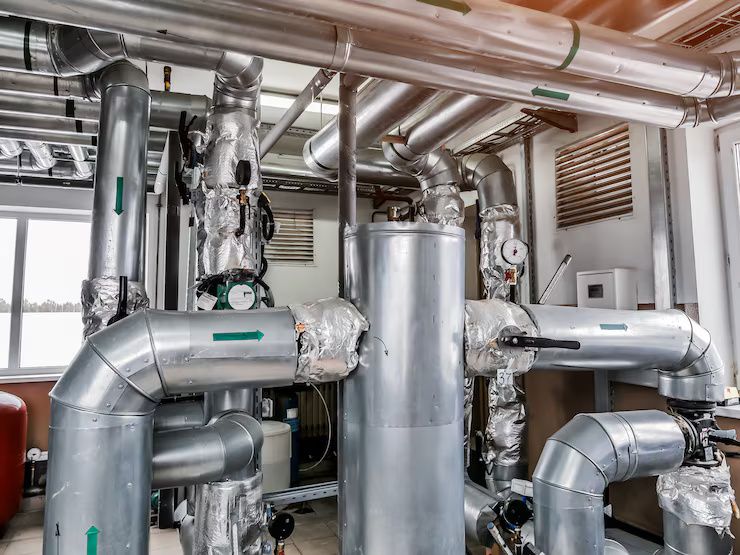
A heat exchanger is a device used to transfer heat between two or more fluids—gases, liquids, or vapors—without them mixing. In industrial settings, these systems are essential for controlling temperatures in processes such as power generation, chemical manufacturing, refrigeration, oil refining, and food processing
The concept dates back to the early industrial revolution when steam condensers were first introduced to improve thermal efficiency. Over time, advances in materials science, thermodynamics, and automation have transformed heat exchangers into highly efficient and durable systems capable of operating in extreme environments.
In simple terms, heat exchangers allow industries to reuse heat energy instead of wasting it—improving energy efficiency, reducing emissions, and saving operational costs.
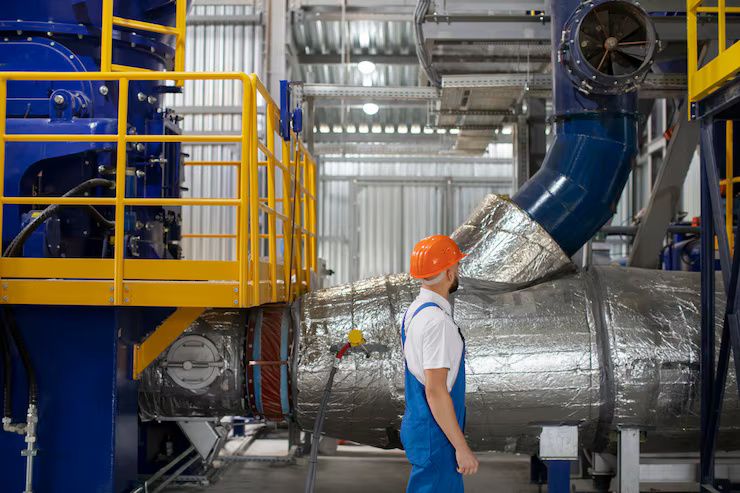
Importance — Why Heat Exchangers Matter in Modern Manufacturing
In an era focused on energy efficiency, process optimization, and sustainability, industrial heat exchangers have become critical for maintaining both performance and environmental compliance.
Their importance can be understood through several key roles:
-
Energy Recovery: Reclaim waste heat from one process to use in another, improving plant efficiency.
-
Temperature Control: Maintain optimal operating conditions for chemical reactions or mechanical systems.
-
Environmental Compliance: Reduce greenhouse gas emissions by optimizing thermal energy use.
-
Cost Optimization: Decrease fuel and energy consumption across production cycles.
-
Equipment Longevity: Prevent overheating or thermal stress on sensitive machinery.
Industries such as petrochemicals, power plants, HVAC, food processing, pharmaceuticals, and marine engineering all rely heavily on advanced heat exchange systems.
Recent Trends and Technological Updates (2024–2025)
The last few years have seen major innovations in heat exchanger design, materials, and digital monitoring systems. Key developments include:
| Trend | Description | Impact |
|---|---|---|
| Additive Manufacturing (3D Printing) | Enables complex, compact geometries with improved heat transfer surfaces. | Reduces manufacturing time and enhances efficiency. |
| Compact Plate Heat Exchangers (CPHE) | Smaller units with high surface area density replacing bulky shell-and-tube systems. | Space-saving and more energy-efficient. |
| AI-Driven Monitoring Systems | Predict maintenance needs using temperature, flow, and vibration data. | Lowers downtime and maintenance costs. |
| Corrosion-Resistant Alloys and Coatings | Use of titanium, Inconel, and graphene coatings to resist harsh environments. | Extends equipment lifespan. |
| Sustainability Integration | Integration into renewable energy systems like geothermal and waste heat recovery plants. | Supports decarbonization goals. |
These innovations are helping industries achieve higher thermal performance and better lifecycle management.
Laws, Policies, and Industrial Standards
Heat exchanger design and operation are governed by international and national standards to ensure safety, reliability, and environmental responsibility.
Key Global and Indian Standards Include:
-
ASME Section VIII: Governs design and fabrication of pressure vessels and heat exchangers.
-
TEMA (Tubular Exchanger Manufacturers Association): Provides standardized design and construction guidelines.
-
API 660: Specifies requirements for shell-and-tube heat exchangers used in oil refining and petrochemical industries.
-
ISO 16812: International standards for heat exchanger performance evaluation.
-
Bureau of Indian Standards (BIS): Enforces local compliance for pressure and thermal design in industrial setups.
-
Environmental and Energy Efficiency Regulations: Encourage industries to adopt low-carbon, energy-optimized heat exchanger technologies.
Compliance with these standards ensures the exchanger operates safely and efficiently under demanding industrial conditions.
Types of Industrial Heat Exchangers
There are several types of heat exchangers, each optimized for specific flow patterns, temperature ranges, and industrial applications.
| Type | Design Description | Common Applications |
|---|---|---|
| Shell and Tube | Composed of multiple tubes enclosed in a cylindrical shell; fluids flow through tube and shell sides. | Oil refineries, chemical plants, power stations. |
| Plate Heat Exchanger (PHE) | Thin metal plates arranged in series to allow heat transfer between fluids. | Food processing, HVAC, pharmaceuticals. |
| Air Cooled Heat Exchanger (ACHE) | Uses ambient air to cool fluids through finned tubes. | Power generation, petrochemical plants, compressor systems. |
| Double Pipe Exchanger | Two concentric pipes—one fluid flows through the inner pipe, another through the outer annulus. | Small capacity and high-temperature applications. |
| Spiral Heat Exchanger | Spiral channels for efficient heat transfer with minimal fouling. | Slurry and viscous fluid processes. |
| Plate-Fin Exchanger | Stacked plates with fins for compact, lightweight design. | Aerospace, cryogenics, and automotive systems. |
Design Selection Factors:
When choosing a heat exchanger, engineers evaluate temperature difference, pressure drop, fluid type, fouling potential, and available space.
Design Fundamentals and Thermal Principles
The efficiency of a heat exchanger depends on three core principles:
-
Surface Area: Larger contact area between fluids enhances heat transfer.
-
Temperature Gradient: Greater difference between fluid temperatures increases energy exchange rate.
-
Flow Configuration: The direction of fluid flow (parallel, counter, or crossflow) determines overall efficiency.
Common Flow Arrangements:
-
Parallel Flow: Both fluids enter from the same side and move in the same direction — simpler but less efficient.
-
Counter Flow: Fluids move in opposite directions, achieving maximum heat recovery.
-
Cross Flow: Fluids move perpendicular to each other — ideal for air-liquid systems.
Formula (Simplified):
Heat transfer rate = U × A × ΔT
Where:
-
U = overall heat transfer coefficient
-
A = surface area
-
ΔT = temperature difference between fluids
Engineers use computational fluid dynamics (CFD) and simulation tools to optimize exchanger performance for specific operational conditions.
Applications Across Industries
Industrial heat exchangers play a role in nearly every thermal process worldwide.
| Industry | Application |
|---|---|
| Power Generation | Condensers, boiler feedwater heaters, cooling towers. |
| Chemical & Petrochemical | Distillation, reboilers, and process cooling. |
| Oil & Gas | Offshore platform cooling, gas dehydration, heat recovery. |
| Food & Beverage | Pasteurization, sterilization, and temperature control. |
| HVAC Systems | Chillers, air conditioners, and heat recovery ventilation. |
| Pharmaceuticals | Fermentation temperature control and cleanroom air management. |
| Renewable Energy | Geothermal, solar thermal, and waste heat recovery units. |
These systems improve energy efficiency while maintaining safe, stable process temperatures.
Tools, Software, and Resources for Design and Analysis
Modern design and performance analysis of heat exchangers rely on engineering tools and specialized software.
Key Resources Include:
-
Aspen Exchanger Design & Rating (EDR): For detailed thermal and mechanical design.
-
HTRI Xchanger Suite: Used for simulation and performance optimization.
-
ANSYS Fluent & COMSOL Multiphysics: CFD tools for advanced thermal modeling.
-
MATLAB Toolboxes: For custom thermal performance calculations.
-
Online Calculators: Used for quick heat transfer and sizing estimations.
Field Monitoring Tools:
-
Infrared thermography for thermal mapping.
-
Pressure and flow sensors for real-time efficiency tracking.
-
Predictive maintenance software integrated with IoT platforms.
Maintenance, Efficiency, and Troubleshooting
Efficient maintenance of heat exchangers ensures long-term reliability. Key maintenance areas include:
-
Fouling Control: Regular cleaning to remove scale, oil, or sediment buildup.
-
Corrosion Prevention: Using stainless steel, titanium, or specialized coatings.
-
Leak Detection: Routine pressure testing to identify early failures.
-
Thermal Monitoring: Using digital sensors to detect abnormal temperature variations.
-
Gasket Replacement: Critical for plate heat exchangers to prevent cross-contamination.
Efficiency Improvement Tips:
-
Use counter-flow designs where possible.
-
Implement variable speed pumps to adjust flow rates.
-
Opt for compact plate exchangers in space-constrained areas.
-
Regularly perform thermal audits for energy recovery opportunities.
Frequently Asked Questions (FAQs)
1. What is the main purpose of an industrial heat exchanger?
To efficiently transfer heat between fluids in industrial processes, improving energy utilization and maintaining temperature control.
2. Which type of heat exchanger is most commonly used?
The shell-and-tube exchanger remains the industry standard due to its versatility and durability in handling high pressures and temperatures.
3. How often should heat exchangers be cleaned or maintained?
Depending on fluid type and contamination risk, maintenance is usually performed every 6–12 months, with continuous monitoring in critical processes.
4. What materials are best for corrosion resistance?
Titanium, stainless steel, and nickel alloys are preferred in corrosive environments like chemical or marine applications.
5. How do modern technologies improve exchanger performance?
Advanced materials, smart monitoring, and optimized designs increase heat transfer efficiency, extend lifespan, and reduce operational downtime.
Conclusion
Industrial heat exchangers are the unsung heroes of thermal engineering, ensuring efficient energy transfer, system stability, and sustainable operations across industries.
As technology evolves, the future of heat exchangers will emphasize smart design, digital monitoring, and environmental sustainability—creating systems that are not only efficient but also aligned with global energy transition goals.