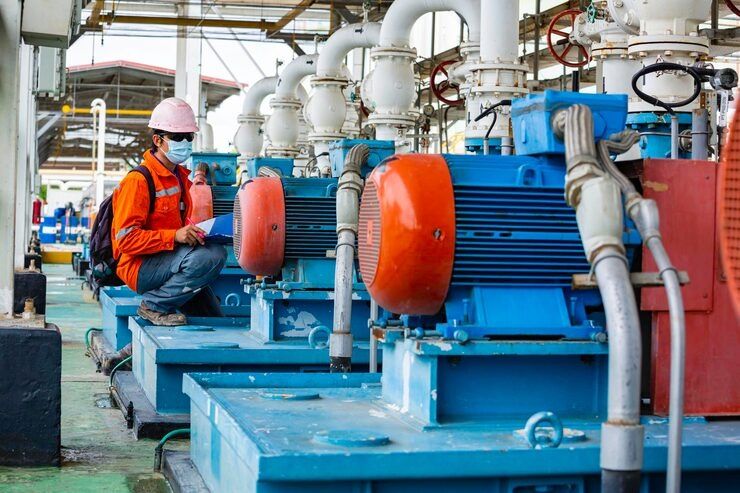
Industrial pumps are mechanical devices used to move liquids, slurries, chemicals, oils, and other fluid materials across various industrial processes. They form the backbone of sectors such as manufacturing, water treatment, oil and gas, construction, pharmaceuticals, food processing, and power generation
industrial pumps include advanced categories such as centrifugal pumps, positive-displacement pumps, metering pumps, and submersible pumps. Their performance is enhanced by automation tools, flow sensors, pressure regulators, and real-time monitoring technologies. Modern pump systems integrate efficiently into large-scale industrial pipelines, energy systems, and automated production lines, ensuring consistent flow and operational reliability.
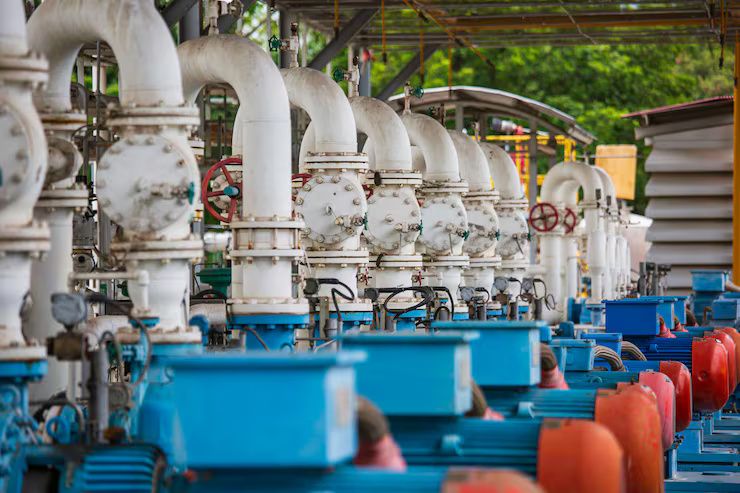
Importance — Why Industrial Pumps Matter in Industrial Operations
Industrial pumps play a critical role in maintaining fluid movement across essential processes. Their reliability directly affects production efficiency, resource management, and operational safety.
Key reasons why industrial pumps are important:
Enables Continuous Production
Industries depend on steady fluid movement—whether water circulation in cooling systems or chemical transfer in manufacturing. Pumps ensure uninterrupted operational cycles.
Improves System Efficiency
Well-maintained pumps help optimize energy usage, reduce fluid wastage, and maintain stable pressure conditions throughout pipelines.
Supports Safety and Stability
Many industries handle hazardous or temperature-sensitive fluids. Reliable pumps prevent leaks, pressure surges, and equipment failures.
Facilitates Process Control
Industrial pumps support precise flow requirements in processes such as chemical dosing, food mixing, pharmaceutical manufacturing, and boiler feed operations.
Reduces Downtime
Quality pumps reduce breakdowns and allow industries to maintain consistent workflow without unexpected interruptions.
As industries expand production capabilities and shift toward automation, effective pump systems remain central to modern operational infrastructure.
Recent Updates — Trends in Industrial Pumps (2024–2025)
The industrial pump sector has evolved rapidly in recent years, driven by digitalization, energy efficiency needs, and material innovations. Below is a table summarizing the latest trends:
| Trend (2024–2025) | Description | Impact on Industries |
|---|---|---|
| Smart Pumping Systems | Integration of IoT sensors, automated flow controls, and digital diagnostics | Enhances performance and reduces maintenance downtime |
| Energy-Efficient Pumps | Higher efficiency motors and optimized impeller designs | Reduces energy costs in large-scale operations |
| Corrosion-Resistant Materials | Advanced polymers, composites, and stainless-steel grades | Improves pump life in chemical and wastewater applications |
| Predictive Maintenance | Real-time monitoring of vibration, pressure, and performance data | Helps identify issues before equipment failure |
| Variable Frequency Drives (VFDs) | Motor speed adjustment based on fluid demand | Enables energy savings and better process control |
| Environment-Friendly Designs | Pumps with reduced leakage and eco-safe materials | Supports sustainability and regulatory compliance |
These shifts highlight the growing emphasis on energy conservation, safety, and automation across fluid-handling operations.
Laws or Policies — Regulations Affecting Industrial Pumps in India
India regulates industrial pump usage through safety, environmental, and manufacturing standards that influence design, installation, and operational practices.
Bureau of Indian Standards (BIS)
Pumps must comply with standards covering:
-
Material specifications
-
Performance tests
-
Efficiency ratings
-
Safety guidelines
Common standards include those for centrifugal, submersible, and positive-displacement pumps.
Energy Efficiency Regulations
The Bureau of Energy Efficiency (BEE) promotes energy-efficient pumping systems, especially in industrial and agricultural applications.
Environmental and Water Management Rules
Industries using pumps for wastewater treatment, chemical handling, or effluent discharge must follow:
-
The Water (Prevention and Control of Pollution) Act
-
Pollution board guidelines for discharge limits
-
Hazardous waste handling rules
Workplace Safety Regulations
Pump installations must follow rules under:
-
The Occupational Safety, Health and Working Conditions Code
-
Factory maintenance standards
-
Pressure and pipeline safety guidelines
These rules help industries maintain safe operations with properly regulated fluid-handling systems.
Tools and Resources — Helpful Options for Pump Operation and Maintenance
Modern industrial pump systems rely on a mix of digital tools and maintenance equipment to enhance reliability and efficiency.
Digital Tools and Monitoring Systems
-
Pressure and flow monitoring apps
-
IoT-enabled dashboards
-
Automated fault-detection software
-
Cloud-based maintenance logs
-
Sensor-based vibration and temperature trackers
Maintenance Tools
-
Alignment tools for shafts
-
Lubrication kits
-
Impeller wear-measurement devices
-
Thermal scanners
-
Pressure-testing equipment
Supporting Accessories
-
Check valves
-
Strainers and filters
-
Mechanical seals
-
Gaskets and O-rings
-
VFD controllers
Organizational Templates
-
Pump performance logs
-
Preventive maintenance checklists
-
Spare part tracking sheets
-
Energy audit templates
-
Calibration and inspection charts
These tools help organizations maintain safe and efficient pumping systems while reducing operational risks.
Types of Industrial Pumps and Their Operating Principles
Below is a detailed list of major pump categories, along with their operating principles. This section follows a neutral, educational format.
1. Centrifugal Pumps
Operating Principle:
Uses rotational energy from an impeller to convert mechanical energy into kinetic energy, creating fluid flow.
Applications:
Cooling systems, water supply, chemical transfer, HVAC systems.
2. Positive-Displacement Pumps
These pumps move fixed amounts of fluid with each cycle.
a) Rotary Pumps
Using gears, screws, vanes, or lobes, they move fluid through cyclic rotary action.
Applications:
Oil transfer, chemical dosing, hydraulic systems.
b) Reciprocating Pumps
Use pistons or diaphragms to move fluids through linear motion.
Applications:
High-pressure cleaning, boiler feed, chemical injection.
3. Submersible Pumps
Operating Principle:
Designed to operate underwater, pushing fluid upward using sealed motors.
Applications:
Drainage, wastewater, mining, borewells.
4. Diaphragm Pumps
Operating Principle:
Flexible diaphragm creates suction and discharge through pressure changes.
Applications:
Corrosive liquids, paints, chemicals, and slurries.
5. Peristaltic Pumps
Operating Principle:
Rollers compress a flexible tube to push fluid forward.
Applications:
Food processing, pharmaceuticals, metering applications.
6. Gear Pumps
Operating Principle:
Interlocking gears generate flow by trapping and transferring fluid.
Applications:
Oil circulation, fuel transfer, hydraulic systems.
FAQs — Common Questions About Industrial Pumps
1. How often should industrial pumps be serviced?
Most pumps require preventive checks monthly and detailed servicing quarterly or semi-annually, depending on usage and fluid type.
2. What causes pump failure?
Common reasons include improper lubrication, misalignment, incorrect flow rates, cavitation, and material corrosion.
3. Which pump type is best for high-flow applications?
Centrifugal pumps handle large volumes and are ideal for high-flow, low-pressure operations.
4. Are energy-efficient pumps becoming standard?
Yes, industries increasingly choose pumps with high-efficiency motors and VFD control systems to reduce energy consumption.
5. How do sensors help in pump maintenance?
Sensors track vibration, temperature, pressure, and flow, helping detect early signs of wear or malfunction.
Conclusion
Industrial pumps are essential components in modern industries, supporting fluid transfer, process control, energy systems, and wastewater treatment. With innovations in smart technology, energy efficiency, and material engineering, pump systems continue to evolve to meet current industrial demands. As regulations strengthen and digital monitoring becomes more widespread, industries benefit from improved reliability, reduced downtime, and safer operations.