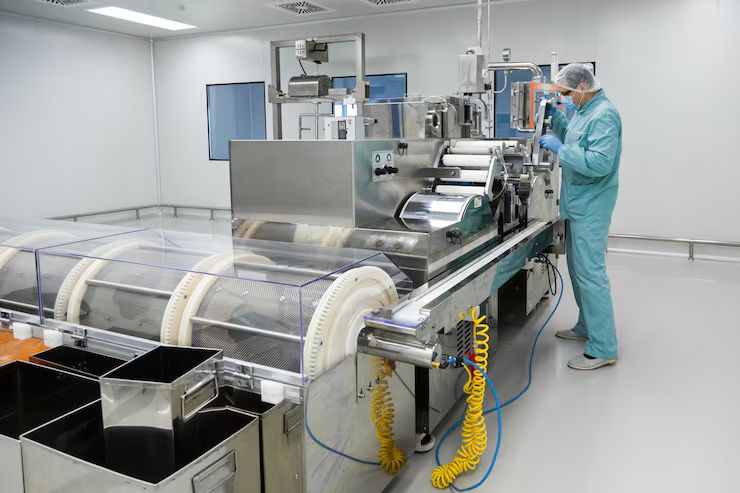
Vertical Form Fill Seal (VFFS) machines are essential packaging systems used across food processing, pharmaceuticals, agriculture, household goods, and numerous industrial applications. Their core purpose is to automate three main tasks— forming packaging material into a pouch, filling it with product, and sealing the package—using one continuous vertical system
These machines help manufacturers maintain precision, hygiene, and uniformity while handling a wide variety of items like powders, liquids, granules, snacks, chemicals, frozen foods, pharmaceuticals, and industrial ingredients. Because packaging plays a key role in product safety, traceability, and shelf life, VFFS systems were developed to provide a controlled, repeatable, and efficient packaging process.
Importance: Why VFFS Technology Matters Today
VFFS machines support modern packaging requirements where accuracy, hygiene, and speed are essential. Their importance continues to grow due to several key factors:
Improved Packaging Efficiency
Industries that require high-volume production rely on VFFS systems to maintain output while reducing manual errors and inconsistencies.
Support for Modern Food Safety Standards
Precise sealing reduces contamination risks and aligns with international safety frameworks such as HACCP, ISO 22000, and FDA packaging safety requirements.
Adaptability for Various Products
The technology supports multiple packaging formats such as:
-
Pillow pouches
-
Gusseted bags
-
Sachets
-
Stick packs
-
Multi-layer barrier pouches
This versatility is highly valued in food, chemical, and consumer goods industries.
Better Material Utilization
VFFS systems optimize film usage, reducing waste, and supporting sustainable packaging objectives.
Impact on Industries
The machines are used by:
-
Food processing companies
-
Pharmaceutical manufacturers
-
Chemical producers
-
Agricultural product packers
-
Industrial powder and material suppliers
As global demand for pre-packed and hygienic products increases, VFFS systems play a vital role in supporting packaging automation.
Recent Updates: Trends and Developments in VFFS Technology (2023–2024)
In the past year, VFFS innovation has focused on automation, sustainability, digital monitoring, and improved sealing performance.
Smart Packaging Integration (2023–2024)
Manufacturers have introduced advanced sensor-based controls for:
-
Temperature regulation
-
Film tension control
-
Seal integrity monitoring
This ensures more consistent packaging quality.
Energy-Efficient Sealing Systems (2024)
New heat-sealing technologies reduce power consumption while maintaining strong seals, especially for recyclable films.
Rise of Recyclable and Compostable Films
Global industries are shifting from multi-layer laminates toward mono-material films that align with sustainability goals. VFFS machines are being upgraded to handle these environmentally friendly materials.
IoT-Enabled Machine Monitoring (2023–2024)
Industry 4.0 enhancements include:
-
Predictive maintenance sensors
-
Real-time performance dashboards
-
Automated fault detection
This allows continuous monitoring and reduces downtime.
Integration with Robotics
Automated feeding systems and robotic palletizing lines have become more common, creating end-to-end packaging automation.
Laws or Policies: Regulatory Influence on VFFS Packaging
Packaging systems like VFFS machines operate under several international and regional regulations. While the rules vary by country, the main regulatory themes include:
Food Packaging Regulations
-
FDA (United States): Standards for packaging materials and hygiene.
-
FSSAI (India): Requirements related to packaged food safety.
-
EFSA (European Union): Packaging compliance for food contact materials.
Environmental Packaging Standards
Countries have introduced regulations encouraging recyclable or reduced-waste packaging, affecting film types used in VFFS machines. Examples include:
-
EU Packaging Waste Directive
-
India’s Plastic Waste Management Rules (Amended 2023)
-
U.S. state-level Extended Producer Responsibility (EPR) programs
Industrial Safety Regulations
VFFS machines must meet:
-
CE Machinery Safety Directive
-
ISO machine safety standards
-
Electrical and fire-safety codes
These policies ensure safe operation, emergency controls, and proper guarding mechanisms.
Labeling Requirements
Industries must include:
-
Batch numbers
-
Manufacturing dates
-
Product information
-
Traceability data
VFFS systems often integrate printers or label applicators to support compliance.
Tools and Resources: Useful Applications, Calculators, and Websites
Below are helpful tools and resources related to packaging engineering, machine performance, and VFFS technology.
Packaging Tools
-
Film Thickness Calculators – Estimate material usage and package strength.
-
Seal Integrity Testing Guides – Determine seal performance under pressure and temperature changes.
-
Material Compatibility Charts – Match products with suitable films.
Engineering & Automation Resources
-
OEE (Overall Equipment Effectiveness) Calculators – Evaluate packaging line productivity.
-
Predictive Maintenance Apps – Monitor vibration, temperature, and operational health.
-
PLC Simulation Software – Useful for understanding automated packaging control logic.
Industry Learning Platforms
-
Packaging World learning center
-
Institute of Packaging Professionals (IoPP)
-
Food safety and packaging regulatory portals (FSSAI, FDA, EU Commission)
Software Tools
-
CAD tools for packaging design
-
Production monitoring dashboards
-
Film optimization tools offered by packaging material suppliers
FAQs
What is a Vertical Form Fill Seal machine?
It is an automated packaging system that forms film into a pouch, fills it with product, and seals it vertically in a continuous process.
Which products can be packaged using VFFS technology?
VFFS machines handle powders, liquids, granules, snacks, chemicals, frozen foods, spices, pharmaceuticals, and industrial materials.
What type of films are used in VFFS systems?
Common materials include polyethylene, polypropylene, laminated films, and increasingly recyclable mono-material films.
How does a VFFS machine improve packaging consistency?
Through controlled sealing temperature, sensor-based film handling, accurate dosing systems, and automated sealing.
Are VFFS machines compatible with modern sustainability standards?
Yes. Many updated systems support recyclable films, compostable materials, and reduced film wastage.
Conclusion
Vertical Form Fill Seal machines are among the most versatile and essential packaging technologies used today. Their ability to create reliable, hygienic, and consistent packaging at high speeds has transformed production across numerous industries. Recent developments in sustainability, automation, and digital monitoring continue to enhance the performance of VFFS systems, making them a central component of modern packaging operations.