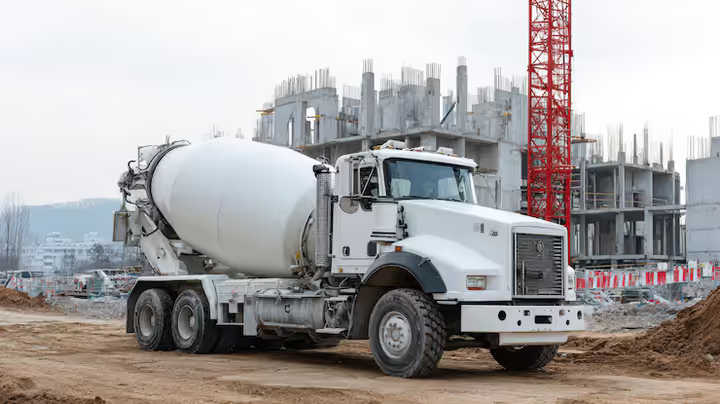
Concrete Mixing Machines: A Guide to Mixing Technology, Equipment and Concrete Production
Concrete mixing machines are mechanical systems used to combine cement, aggregates, water, and other approved ingredients into a uniform concrete mixture.
They are used in construction projects ranging from small building work to large infrastructure developments. Depending on the machine design, mixing can take place in a rotating drum, pan, twin-shaft chamber, or another controlled mixing arrangement.
Understanding concrete mixing machines involves examining their types, operating principles, materials, mixing methods, applications, quality controls, and recent developments. The appropriate machine configuration depends on concrete requirements, batch size, material characteristics, site conditions, and production arrangements.
Context
What Are Concrete Mixing Machines?
Concrete mixing machines combine different concrete ingredients until the mixture reaches the required level of uniformity. The basic materials commonly include cement, fine aggregate, coarse aggregate, and water. Some concrete formulations may also contain approved mineral additions or chemical admixtures.
The mixing action distributes the ingredients throughout the batch. Proper mixing is important because differences in material distribution can influence workability, strength development, setting behavior, and other characteristics.
A typical concrete mixing arrangement may include:
Aggregate storage bins
Cement storage or feeding equipment
Water measurement systems
Admixture dosing equipment
Concrete mixer
Control panel
Discharge system
Conveyor or material transfer equipment
Cleaning and inspection equipment
The configuration varies according to the production method and concrete application.
Development of Concrete Mixing Equipment
Early concrete preparation relied heavily on manual mixing using basic tools and containers. As construction requirements expanded, mechanical mixers were developed to improve the consistency and volume of concrete production.
Rotating drum mixers became widely used because they could combine materials through repeated movement. Later systems introduced stationary mixers, pan mixers, twin-shaft mixers, planetary mixers, electronic controls, automatic weighing, and integrated batching systems.
Modern concrete mixing machines can form part of larger concrete batching plants. These systems may coordinate aggregate weighing, cement measurement, water dosing, mixing, discharge, and production records through a central control system.
Main Types of Concrete Mixing Machines
Drum mixers use a rotating drum to move concrete ingredients through the mixing chamber. Tilting drum, non-tilting drum, and reversing drum configurations are used for different production arrangements.
Pan mixers use a stationary circular mixing pan with rotating mixing tools. They are commonly associated with applications where controlled mixing action is required for particular concrete or dry-material formulations.
Twin-shaft mixers use two horizontal shafts fitted with mixing elements. The shafts rotate in coordinated directions to move materials through the chamber.
Planetary mixers use rotating mixing tools that move around a central axis while also rotating around their own axes. This produces a complex mixing pattern within the chamber.
Other categories include:
Portable concrete mixers
Stationary concrete mixers
Truck-mounted drum mixers
Batch mixers
Continuous mixers
Automatic concrete mixing systems
Compact mixers for restricted construction areas
The machine type should correspond with the concrete formulation, production method, and physical arrangement of the project.
Basic Mixing Process
Concrete production normally begins with the measurement of raw materials. Aggregates, cement, water, and other ingredients are measured according to the selected mixture design.
The materials then enter the mixer. Mechanical movement distributes the ingredients and allows water to combine with cement and aggregates.
After mixing, the concrete is discharged into a truck, hopper, pump system, mould, or another receiving arrangement. The fresh concrete is then transported and placed according to the construction process.
The general sequence can be represented as:
Material measurement → Ingredient feeding → Mixing → Uniformity check → Discharge → Transport and placement
The exact sequence varies between batch plants, construction sites, and continuous production systems.
Importance
Consistent Concrete Mixtures
Concrete properties depend partly on the proportions and distribution of its ingredients. Mechanical mixing helps produce a more consistent mixture than uncontrolled manual movement.
Mixing time, rotation speed, material sequence, water quantity, and mixer design can influence the resulting concrete. The appropriate parameters depend on the mixture design and equipment configuration.
Material Measurement
Accurate material measurement is an important part of concrete production. Aggregate moisture, cement quantity, water content, and admixture dosage can influence the final mixture.
Modern systems may use load cells, flow meters, weighing hoppers, and automated dosing equipment. Measurement records can help production teams compare batches and identify changes in material quantities.
Construction Applications
Concrete mixing machines are used in many construction environments.
| Application | Typical mixer arrangement | Main consideration |
|---|---|---|
| Residential construction | Portable or small drum mixer | Site space and batch quantity |
| Commercial buildings | Stationary or batching-plant mixer | Production coordination |
| Roads and bridges | Large batching systems | Continuous material supply |
| Precast concrete | Pan, planetary, or twin-shaft mixer | Mixture uniformity |
| Paving projects | Pan or specialized mixer | Material consistency |
| Remote construction | Portable mixer | Transportation and site access |
| Infrastructure work | Large-scale batching system | Batch control and logistics |
The actual equipment configuration depends on project design, concrete specification, site layout, and production volume.
Quality and Workability
Concrete needs suitable workability for transportation, placement, vibration, and finishing. Mixing affects how cement paste and aggregates are distributed throughout the batch.
Workability can change with water content, aggregate grading, temperature, admixture dosage, and mixing conditions. Laboratory and field testing can therefore be used alongside mixer controls.
Production Planning
Concrete production requires coordination between raw-material storage, measurement, mixing, transportation, placement, and curing. Delays between these stages can influence fresh concrete handling.
Production planning may consider:
Required concrete quantity
Batch size
Mixing cycle
Material availability
Aggregate moisture
Transportation distance
Placement sequence
Weather conditions
Testing requirements
A suitable production arrangement depends on the complete construction process rather than mixer capacity alone.
Recent Updates
Automation and Digital Controls
From 2024 through 2026, concrete production equipment has continued to incorporate programmable controllers, digital interfaces, sensors, and automated material measurement. These systems can coordinate aggregate feeding, cement dosing, water measurement, mixing cycles, and discharge sequences.
Digital control panels can display selected operating information such as batch quantities, cycle status, alarms, and production records. Available functions vary according to machine design.
Automated Weighing and Dosing
Load cells and electronic weighing systems are increasingly integrated into concrete batching and mixing arrangements. These systems can measure aggregates, cement, water, and selected additives according to programmed quantities.
Moisture measurement can also be relevant because aggregates may contain varying amounts of water. Adjustments to the mixture can therefore depend on measured or estimated moisture conditions.
Sensor-Based Monitoring
Sensors can monitor mixer motor load, temperature, vibration, hydraulic pressure, and other equipment conditions. These measurements can provide information about changes in machine operation.
Digital records can be used alongside inspection and maintenance procedures. Sensor availability varies between equipment configurations.
Energy Management
Concrete mixing systems use electrical or other forms of energy for motors, conveyors, pumps, and supporting equipment. Facilities increasingly examine energy consumption across individual production stages.
Monitoring motor load, idle periods, operating cycles, and equipment utilization can provide information about energy use. Actual consumption depends on mixer size, material quantity, operating conditions, and production arrangement.
Improved Material Handling
Modern concrete plants may integrate conveyors, aggregate feeders, screw conveyors, pumps, and automated discharge systems. Coordinating these components can reduce unnecessary material movement within the production area.
Automated handling also requires appropriate guarding, sensor arrangements, emergency controls, and inspection procedures.
Digital Production Records
Batch records can contain information about material quantities, mixture identification, production time, equipment settings, and selected quality measurements.
Digital documentation can help organize production information and compare batches. The depth of recordkeeping depends on facility requirements and applicable quality systems.
Laws or Policies
Indian Standards for Concrete
Concrete production in India is influenced by technical standards published by the Bureau of Indian Standards. Standards can address concrete materials, mixture requirements, testing procedures, construction practices, and related subjects.
IS 456 is a major reference for plain and reinforced concrete design and construction. Other Indian Standards address cement, aggregates, water, admixtures, testing, and specific concrete applications.
The applicable standard depends on the project and concrete type.
Construction and Workplace Safety
Concrete mixing machines involve rotating drums, shafts, gears, electrical equipment, conveyors, loading systems, and material movement. These components create mechanical and electrical hazards if not properly controlled.
The Occupational Safety, Health and Working Conditions Code, 2020 provides a broader framework for workplace health and safety in India, subject to implementation and applicable rules. Factory and state-level requirements can also apply.
Environmental Considerations
Concrete production can generate dust, wastewater, noise, and leftover material. Cement and aggregate handling can produce airborne particles, while equipment cleaning can generate water containing cementitious residues.
The Central Pollution Control Board and relevant State Pollution Control Boards provide environmental frameworks for industrial activities. Requirements vary according to facility location, scale, processes, and waste streams.
Material and Quality Testing
Concrete testing may include slump measurement, compressive strength testing, temperature measurement, density assessment, and other checks relevant to the mixture and project specification.
Laboratory and field testing should follow the applicable Indian Standard or project specification. Testing requirements differ according to concrete type and construction application.
Tools and Resources
Concrete Mixture Planning Tools
Concrete mixture worksheets and digital calculation tools can be used to record aggregate quantities, cement content, water quantity, admixture dosage, moisture adjustments, and batch sizes.
A production worksheet may include:
Mixture identification
Aggregate quantities
Cement quantity
Water quantity
Admixture dosage
Aggregate moisture
Mixer cycle information
Batch identification
Quality-test results
Mixture calculations should correspond to the applicable project specification and technical standard.
Quality-Control Equipment
Common tools associated with concrete production include:
Weighing scales and load cells
Slump testing equipment
Concrete compression testing machines
Moisture measurement instruments
Concrete thermometers
Density measurement equipment
Aggregate grading sieves
Flow measurement devices
The selected equipment depends on the concrete type and testing procedure.
Maintenance and Monitoring Tools
Maintenance records can document mixer inspection, lubrication, bearing condition, blade or paddle wear, motor condition, electrical checks, and cleaning activities.
Digital monitoring platforms can organize sensor readings and equipment records where such systems are installed.
Government and Technical Resources
Useful technical information can be obtained from the Bureau of Indian Standards, Central Pollution Control Board, State Pollution Control Boards, and relevant construction authorities.
Equipment manuals, mixer drawings, electrical diagrams, mixture specifications, calibration records, and maintenance schedules are also important resources for operating a particular system.
FAQs
What are concrete mixing machines used for?
Concrete mixing machines combine cement, aggregates, water, and other approved ingredients into a uniform concrete mixture. They are used in building construction, roads, bridges, precast production, paving, and other construction activities.
How do concrete mixing machines work?
The required ingredients are measured and introduced into a mixing chamber. Rotating drums, paddles, shafts, or planetary tools move the materials until the mixture reaches the required degree of uniformity. The concrete is then discharged for transportation or placement.
What types of concrete mixing machines are available?
Common types include drum mixers, pan mixers, planetary mixers, twin-shaft mixers, portable mixers, stationary mixers, batch mixers, and continuous mixers. The appropriate arrangement depends on mixture characteristics, batch quantity, and construction conditions.
How is concrete mixture quality checked?
Quality can be assessed through material measurement, fresh-concrete tests, and hardened-concrete tests. Common checks include slump, temperature, density, and compressive strength, depending on the applicable specification.
What factors affect concrete mixing?
Material proportions, aggregate moisture, mixing time, mixer design, rotation speed, temperature, admixture dosage, and ingredient sequence can influence the resulting mixture. Proper process control and testing help document these variables.
Conclusion
Concrete mixing machines provide controlled methods for combining cement, aggregates, water, and other concrete ingredients. Different systems, including drum, pan, planetary, twin-shaft, portable, batch, and continuous mixers, are used for different production arrangements. Recent developments have focused on automation, electronic measurement, sensor monitoring, energy tracking, material handling, and digital batch records. In India, technical standards, workplace requirements, environmental rules, and project specifications influence concrete mixing and quality-control practices.