Plastic Thermoforming Machines: Learn About Types, Functions and Applications
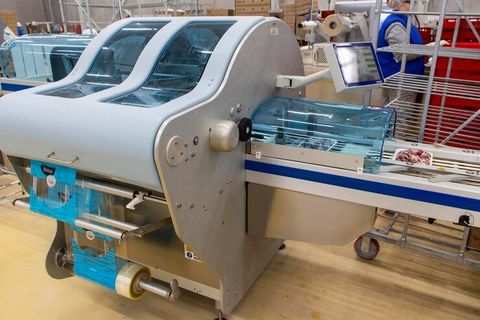
Plastic Thermoforming Machines are manufacturing systems used to heat thermoplastic sheets until they become flexible and then shape them over or inside a mold.
After forming, the plastic is cooled so it retains the required shape, and excess material is normally trimmed away. Thermoforming is used for packaging, food containers, automotive components, appliance liners, medical packaging, trays, panels, and many other plastic products where shaped sheet material is required.
Context
What Are Plastic Thermoforming Machines?
Plastic Thermoforming Machines transform flat thermoplastic sheets into three-dimensional shapes through controlled heating, forming, and cooling. Unlike processes that begin with plastic pellets injected into a closed mold, thermoforming normally starts with a pre-produced sheet or film.
The sheet is held securely and moved into a heating area. Once it reaches an appropriate forming temperature, the softened material is shaped against a mold using vacuum, air pressure, mechanical force, or a combination of these methods.
After cooling, the formed plastic becomes sufficiently rigid to maintain its new geometry. The component can then move to trimming, punching, stacking, inspection, or another production stage.
Development of Thermoforming
Thermoforming developed as plastics became more widely used in manufacturing during the twentieth century. Early processes relied heavily on relatively simple heating and vacuum-forming arrangements.
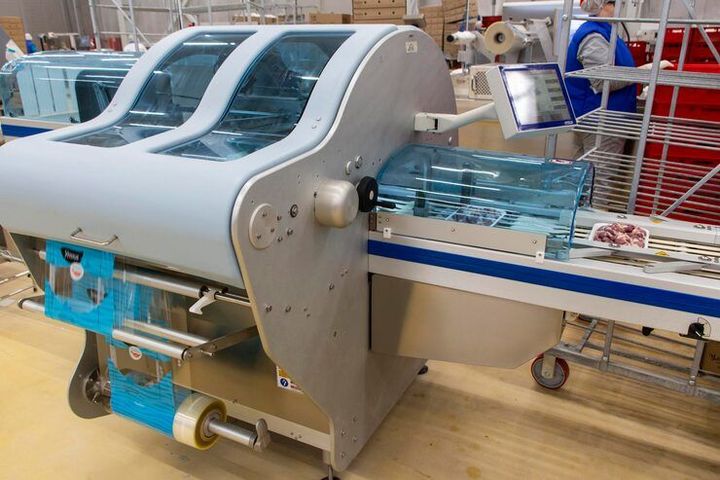
Modern equipment can integrate precise heaters, sensors, programmable controllers, automated sheet feeding, forming stations, trimming systems, stacking mechanisms, and digital monitoring. Large machines can operate as part of integrated manufacturing lines.
Main Thermoforming Methods
Vacuum forming uses a pressure difference to draw heated plastic against the mold surface. It is widely used for packaging, trays, panels, and various formed components.
Pressure forming applies additional air pressure to push heated plastic against the mold. This approach can reproduce more detailed features in suitable applications.
Mechanical forming uses matched tools or mechanical movement to shape the heated sheet. Some systems combine vacuum, pressure, and mechanical assistance.
Twin-sheet forming heats two plastic sheets and forms them together. The process can create hollow structures and components requiring particular shapes or internal spaces.
| Forming Method | Main Principle | Common Application |
|---|---|---|
| Vacuum forming | Vacuum draws sheet toward mold | Trays, panels, packaging |
| Pressure forming | Air pressure shapes heated sheet | Detailed components |
| Mechanical forming | Tools physically shape material | Selected industrial parts |
| Twin-sheet forming | Two sheets are formed together | Hollow structures |
| Inline thermoforming | Multiple stages linked together | Repeated production |
Basic Machine Components
Although machine configurations vary, many Plastic Thermoforming Machines contain similar functional areas.
Important components can include:
- Sheet feeding mechanism
- Clamping frame or transport chain
- Heating elements
- Temperature sensors
- Forming station
- Vacuum system
- Compressed-air system
- Cooling equipment
- Trimming station
- Stacking or handling mechanism
- Programmable controller
- Safety guards and emergency controls
The size and complexity of these components depend on the material, sheet thickness, component dimensions, and production requirements.
Importance
Why Thermoforming Matters
Thermoforming allows manufacturers to create shaped plastic components from sheet material using a relatively direct sequence of heating, forming, cooling, and trimming. The process can handle both relatively thin packaging films and thicker sheets used for structural components.
Plastic Thermoforming Machines can also integrate several production stages. In suitable applications, feeding, heating, forming, cutting, inspection, and stacking can take place within a connected manufacturing arrangement.
Industries Using Thermoforming
Thermoformed components appear in many everyday products. Food packaging can include trays, cups, lids, and containers produced through thermoforming. Electronics packaging may use shaped trays that hold individual components.
Other applications include:
- Automotive interior components
- Appliance liners
- Medical packaging
- Food containers
- Transport trays
- Electronics packaging
- Agricultural trays
- Industrial covers
- Display components
- Equipment housings
- Refrigerator interior panels
- Protective packaging
The material and forming process depend on the required mechanical, thermal, barrier, appearance, and hygiene characteristics.
Materials Used in Thermoforming
Several thermoplastics can be processed using thermoforming methods. Each material has its own heating range, forming behavior, strength, transparency, chemical resistance, and recycling characteristics.
Common materials include polyethylene terephthalate, polypropylene, polystyrene, polyethylene, polyvinyl chloride in applicable uses, acrylonitrile butadiene styrene, and other thermoplastic sheets.
Material selection also depends on the final application. Food-contact packaging, automotive components, and industrial covers can have very different technical requirements.
Temperature Control
Temperature is a central factor in thermoforming. If the sheet is not heated evenly, some areas may stretch differently from others.
Modern equipment can divide heaters into multiple zones. Each zone can be controlled separately to create a more appropriate temperature distribution across the sheet.
Cooling also affects component stability and cycle time. Mold temperature, airflow, water cooling, material thickness, and component geometry can influence how quickly the formed material becomes stable.
Recent Updates
Greater Automation
From 2024 through 2026, Plastic Thermoforming Machines have continued to incorporate automation across feeding, heating, forming, trimming, inspection, and stacking operations.
Programmable controls can coordinate machine movements and store process settings for different production configurations. Automated handling can also move formed components between processing stages.
Digital Process Monitoring
Sensors are increasingly used to monitor heater temperature, sheet position, vacuum pressure, compressed-air pressure, cooling conditions, cycle duration, and machine movement.
Production data can be recorded and analyzed to identify process variation. Digital dashboards can provide operators with information about machine status and selected process parameters.
Machine Vision
Camera-based inspection is becoming more common in automated production. Machine-vision systems can examine selected characteristics such as component dimensions, edge conditions, surface appearance, shape, and the presence of visible forming irregularities.
These systems depend on suitable lighting, camera positioning, software configuration, and inspection criteria. Human inspection may still be used for characteristics that are difficult to evaluate automatically.
Material Efficiency
Material use has become an important area of thermoforming development. Because trimming can create leftover sheet material around formed components, manufacturers are examining nesting layouts, trim recovery, sheet thickness control, and recycling arrangements.
Some processes can collect clean production trim and return suitable material to a recycling pathway. Whether material can be reused in the same application depends on polymer type, contamination, processing history, and regulatory requirements.
Energy Management
Heating represents an important part of thermoforming energy demand. Modern equipment can use improved heater controls, insulation, zone management, and process monitoring to regulate energy use.
Servo-driven machine movements are also increasingly used for selected functions. Their suitability depends on machine design, production rate, forming force, and operating conditions.
Laws or Policies
Indian Regulatory Context
Plastic manufacturing in India is influenced by environmental, workplace, product, and waste-management requirements. The rules applying to a thermoforming facility depend on its materials, products, production scale, location, and waste streams.
The Ministry of Environment, Forest and Climate Change and the Central Pollution Control Board have roles in India's environmental framework. State Pollution Control Boards also administer requirements at the state level.
Plastic Waste Management
India's Plastic Waste Management Rules, 2016, as amended, provide an important framework for the handling and management of plastic waste. Requirements can vary according to whether an organization is a producer, importer, brand owner, processor, or another regulated entity.
Extended Producer Responsibility provisions can also apply to certain plastic packaging categories. Applicability depends on the organization's role and the type of material or packaging involved.
Workplace Safety
Thermoforming involves hot surfaces, heaters, moving mechanisms, cutting systems, compressed air, vacuum equipment, and electrical systems. These hazards require appropriate guarding, emergency controls, operating procedures, and worker protection.
The Occupational Safety, Health and Working Conditions Code, 2020 provides a national framework for workplace health and safety, subject to its applicability and implementation framework. Additional state and sector requirements may also apply.
Food-Contact Applications
Thermoformed packaging intended for food contact can be subject to additional material and hygiene requirements. The Food Safety and Standards Authority of India provides regulations relevant to food packaging and materials that come into contact with food.
Material composition, migration characteristics, cleanliness, labeling, and intended application may therefore require consideration when thermoformed components are used for food packaging.
Tools and Resources
Thermoforming Simulation Software
Computer simulation can help engineers examine material stretching, thickness distribution, heating patterns, and forming behavior before physical production begins. Results depend on accurate material properties and process parameters.
Temperature Measurement
Infrared sensors, thermal imaging equipment, and contact temperature instruments can help monitor sheet and mold temperatures. Temperature information can help identify uneven heating or cooling conditions.
Vacuum and Pressure Monitoring
Pressure gauges, vacuum sensors, and electronic transmitters can monitor forming conditions. Recorded measurements can also help compare different production cycles.
Production Checklists
A process checklist can include:
- Material identification
- Sheet thickness
- Heater settings
- Forming temperature
- Vacuum level
- Air pressure
- Mold temperature
- Cooling conditions
- Trim condition
- Component dimensions
- Safety-system inspection
Technical resources from the Bureau of Indian Standards, Central Pollution Control Board, State Pollution Control Boards, FSSAI, equipment manuals, and polymer-material references can provide additional information.
FAQs
What are Plastic Thermoforming Machines used for?
Plastic Thermoforming Machines shape heated thermoplastic sheets into products such as trays, packaging, panels, appliance liners, automotive components, medical packaging, and industrial covers.
How do Plastic Thermoforming Machines work?
The machine heats a plastic sheet until it becomes flexible. Vacuum, air pressure, mechanical movement, or combined methods then shape the sheet against a mold before cooling and trimming.
What materials can Plastic Thermoforming Machines process?
Common materials include PET, polypropylene, polystyrene, polyethylene, ABS, and other suitable thermoplastics. Material selection depends on forming temperature, strength, appearance, application, and regulatory requirements.
What is the difference between vacuum forming and pressure forming?
Vacuum forming draws heated plastic toward a mold using reduced pressure. Pressure forming applies additional air pressure, which can help reproduce more detailed mold features in suitable applications.
Why is temperature important in thermoforming?
The plastic sheet must reach an appropriate and reasonably uniform forming temperature. Uneven heating can cause inconsistent stretching, thickness variation, incomplete forming, or dimensional differences.
Conclusion
Plastic Thermoforming Machines transform heated thermoplastic sheets into shaped components using vacuum, pressure, mechanical movement, or combined methods. They are used across packaging, automotive, appliance, medical, electronics, and industrial applications. Recent developments have focused on automation, digital monitoring, machine vision, material efficiency, and controlled energy use. In India, thermoforming operations may also need to consider plastic waste rules, workplace safety requirements, environmental regulation, and food-contact requirements where applicable.